
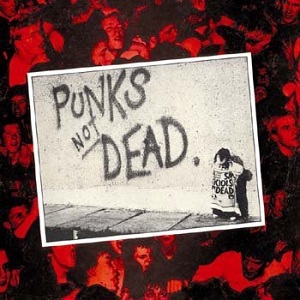
Prophets, Punk, and the Rebellion Against Dead Power
This essay explores the structural similarities between the Old Testament prophets, the early Church Fathers, and the punk movement. At first glance, these worlds appear completely unrelated. One belongs to religion, another to underground music and street culture. Yet beneath the surface they share recognizable patterns: rejection of corruption, outsider identity, ascetic seriousness, symbolic resistance, and confrontation with spiritually exhausted institutions.
When punk emerged in the late 1970s, it arrived as a reaction against social exhaustion. The optimism of the hippie era had faded, rock music had become increasingly commercialized and detached from ordinary people, and economic crisis was spreading across the West. Punk responded to this atmosphere with confrontation rather than escape.
Its music was raw, direct, and often intentionally primitive. Yet behind the noise stood a moral impulse. Punk lyrics addressed unemployment, poverty, social injustice, alienation, state violence, and hypocrisy. Although punk often used satire and provocation, it carried a serious critique of modern society.
While early influences came from American bands such as The Stooges”entity[“music_band”,”MC5”,”American rock band”], and entity[“music_band”,”The Velvet Underground”,”American rock band”], the movement found its main center in the United Kingdom. By the early 1980s, subgenres such as Oi!, street punk, anarcho-punk, crust punk, post-punk, and grindcore had emerged. Through a Do-It-Yourself ethic, these scenes celebrated ordinary people and resisted elites, commercialism, and institutional control.
In a different historical setting, the prophets of the Old Testament also stood outside institutional comfort. Prophets such as Isaiah, Jeremiah, Amos, Elijah, and John the Baptist confronted corrupt rulers and condemned societies that had abandoned divine justice. They attacked idolatry, exploitation, decadence, and moral collapse.
The prophets were not respectable figures within polite society. They existed as outsiders, wanderers, ascetics, and voices from the margins.
The prophet Amos was a shepherd and gatherer of wild figs. He possessed no institutional authority or political protection. Elijah hid in caves and, according to tradition, was fed by ravens in the wilderness. John the Baptist lived in the desert, clothed in rough garments, eating locusts and wild honey. Their authority did not come from institutions, but from uncompromising confrontation with truth.
The early Church Fathers similarly rejected the decadence of the Roman Empire through asceticism and discipline. Christianity in its early centuries was not respectable. It was seen as dangerous, radical, and socially disruptive.
Even figures such as entity[“people”,”Saint Nicholas”,”Christian saint”] — remembered today as a harmless symbol of consumer Christmas culture — originally belonged to a harsher world. According to tradition, during the Council of Nicaea he struck Arius in the face over the Arian heresy. Whether legendary or historical, the symbolism matters: truth was seen as something worth defending passionately, not merely managing diplomatically.
Like the early Christians spreading letters across the Roman Empire, punk scenes created underground networks through fanzines, tape-trading, independent labels, and personal connections. Information moved from person to person outside official cultural channels.
A revealing example comes from entity[“people”,”John Lydon”,”English musician”], frontman of the entity[“music_band”,”Sex Pistols”,”English punk band”] and entity[“music_band”,”Public Image Ltd”,”English post-punk band”]. During a BBC radio interview, Lydon openly suggested that television personality entity[“people”,”Jimmy Savile”,”English media personality”] was involved in horrific crimes. The interview was censored.
Years later, Savile was exposed as one of Britain’s most notorious sexual predators.
Lydon’s position recalls the attitude of entity[“people”,”Athanasius of Alexandria”,”Christian theologian”], who resisted the Arian heresy despite pressure from emperors and bishops. Athanasius famously declared:
> “If the world is against the truth, then I am against the world.”
Although Athanasius spoke in a theological context, the structural similarity is clear. Both he and Lydon confronted institutions that preferred silence over truth. Both possessed a sharp tongue and little interest in social approval.
## Amos and Oi!
Oi! emerged in working-class areas of Britain during the late 1970s. It sought to unite punks, skinheads, and disillusioned working-class youth.
One notable Oi! band was entity[“music_band”,”The Business”,”English punk band”]. In songs such as “Frontline,” they criticized those who profit from the suffering and manipulation of ordinary people.
The prophet Amos spoke in a remarkably similar moral register.
Living during a time of economic prosperity in ancient Israel, Amos condemned wealth built upon exploitation. He attacked “houses of ivory” and luxurious estates while ordinary people suffered.
Like The Business rejecting false authority from television screens and political elites, Amos rejected the authority of corrupt religious institutions. When critics attempted to silence him because he lacked official credentials, Amos answered that he was merely a shepherd called to speak truth.
Both expose the same pattern:
Powerful people often live in abstractions — law, profit, political language, public image — while ordinary people live in reality.
## Street Punk and John the Baptist
Street punk emerged as a reaction against what many considered the artistic pretension of early British punk. Its themes included urban violence, drinking culture, working-class struggle, riots, police conflict, and social frustration.
One of the genre’s most famous bands is entity[“music_band”,”The Exploited”,”Scottish punk band”]. Their song “Let’s Start a War (Said Maggie One Day)” criticized British Prime Minister entity[“people”,”Margaret Thatcher”,”former Prime Minister of the United Kingdom”] and the Falklands War, suggesting that political leaders use war for power and public image.
The album as a whole expressed fear of Cold War destruction, police brutality, and working-class disillusionment.
John the Baptist similarly confronted political authority directly. He publicly condemned Herod Antipas for divorcing his wife and marrying Herodias, the wife of his brother.
According to the historian entity[“people”,”Josephus”,”Jewish historian”], John possessed enormous influence among ordinary people. Herod feared him because the population was prepared to follow his words.
Herod himself was politically dependent on Rome and lacked genuine authority. Herodias manipulated this weakness to preserve her own status.
John attacked the relationship not merely as private immorality, but as a symbol of corruption within the political order itself.
## Grindcore and Prophetic Judgment
Grindcore is an extreme musical genre drawing from death metal, hardcore punk, industrial music, and noise. Its themes often include anti-militarism, anti-capitalism, animal rights, media manipulation, and social collapse.
The album *Scum* by entity[“music_band”,”Napalm Death”,”English grindcore band”] remains one of the foundational works of the genre.
Songs such as “Multinational Corporations” accuse global corporations of sacrificing human beings for profit, while tracks like “Mind Control” and “Conquest” criticize propaganda and media manipulation.
The album cover, created by entity[“people”,”Jeff Walker”,”English musician”] of entity[“music_band”,”Carcass”,”English extreme metal band”], depicts political leaders, corporations, and businessmen towering above masses of skulls and suffering humanity.
Walker described the hypocrisy of corporations such as Nestlé, Coca-Cola, and McDonald’s during the 1980s, accusing them of exploiting workers and vulnerable populations while presenting themselves as benevolent public institutions.
The cover functions almost like a modern prophetic warning.
Like the terrifying imagery of the prophet Ezekiel, it presents civilization as spiritually diseased beneath its polished surface:
> “This is your civilization — a graveyard covered in colorful logos.”
Yet what is most interesting about grindcore is not only its aggression, but its communal structure.
The grindcore underground strongly resembles the early Christian idea of *ekklesia* — “those called out.”
Early Christians operated outside the dominant social order of the Roman Empire. They developed their own symbols, communication systems, and communities. Similarly, grindcore scenes developed:
* visual codes (patches, shirts, DIY aesthetics)
* underground distribution systems
* tape-trading networks
* hand-made fanzines
* decentralized communication
Like the early Church, these communities survived precisely because they lacked a single central authority that could easily be destroyed.
Despite its violent sound, grindcore scenes were often morally stricter than mainstream society. Many participants embraced veganism, anti-racism, anti-consumerism, pacifism, or sobriety.
## Straight Edge and the Desert Fathers
Straight Edge emerged from the hardcore punk scene as a rejection of drug and alcohol excess.
Inspired by the song “Straight Edge” by entity[“music_band”,”Minor Threat”,”American hardcore punk band”], followers often rejected alcohol, cigarettes, and recreational drugs as a lifelong commitment.
Frontman entity[“people”,”Ian MacKaye”,”American musician”] believed that much of punk rebellion had become predictable self-destruction. For him, intoxication was not freedom but conformity.
A clear mind, he argued, was more dangerous to injustice than chemical escape.
This resembles the logic of the Desert Fathers.
Figures such as entity[“people”,”Anthony the Great”,”Christian monk”] and entity[“people”,”Jerome”,”Christian theologian”] withdrew into the desert to discipline the spirit and resist the decadence of the world.
Similarly, biblical figures such as Samson and John the Baptist embraced strict discipline to remain spiritually sharp.
## Europe, Rebellion, and the Street
The deeper reason why punk, prophets, and early Christian ascetics resemble one another may lie within Europe itself.
Christianity spread through the Roman Empire and profoundly shaped European civilization. Even rebellion in Europe often carries hidden Christian structures.
A striking example occurred during the Byzantine Iconoclasm under Emperor entity[“people”,”Leo III the Isaurian”,”Byzantine emperor”] in the 8th century.
The imperial court attempted to destroy icons and centralize religious authority. Yet icons were not merely decorations. Every village, city, monastery, and household possessed its own patron saint and sacred image.
Icons represented local identity and spiritual belonging.
Resistance did not primarily come from armies, but from monks and ordinary people.
When imperial authorities attempted to remove the icon of Christ above the Chalke Gate in Constantinople, a crowd — including many women — physically attacked the officials.
It was effectively a street protest against centralized ideological control.
Another revealing example appeared in East Germany during the Cold War.
Protestant churches often provided shelter for punks persecuted by the communist regime of the DDR. Church leaders recognized within punk the same spirit of marginalized resistance against a system that attempted to control every aspect of life.
Through mohawks, leather jackets, patches, and aggressive music, punks expressed defiance toward one of the most rigid dictatorships in modern Europe.
Like John the Baptist confronting Herodias, they publicly refused submission to official lies.
## Conclusion
Punk and Christianity are not identical, nor should they be artificially merged.
Christianity ultimately points toward transcendence, salvation, and reconciliation with God, while punk often remains trapped within anger, nihilism, or social rage.
Yet structurally they often resemble one another.
Both emerge when societies become spiritually exhausted.
Both distrust dead institutions.
Both create outsider communities.
Both use symbolic language.
Both challenge corruption publicly.
Both value authenticity over social respectability.
The prophets of Israel, the Desert Fathers, underground punk scenes, and extreme music subcultures all reveal a recurring European archetype:
the outsider who stands against a dead world.
In a civilization increasingly dominated by consumption, branding, image management, and institutional control, perhaps this explains why punk — despite endless attempts to commercialize it — continues to survive.
Punks not dead.
They were never merely about music.
They were about refusing spiritual surrender in a world increasingly shaped by passivity, spectacle, and managed conformity.
by Barezi